
A Collaboration of the EV Charging Industry
Mission
The Fair Charge Alliance (FCA), established as the Fair Charge Advisory Council within the Alliance for Transportation Electrification (ATE), advocates for transparent and standardized weights and measures regulations for electric vehicle (EV) charging infrastructure. We promote regulatory frameworks that protect consumers and foster market scalability while building the public trust necessary for the EV transition. By collaborating directly with regulators and inspectors at state and local governments, we ensure every EV driver receives the pricing accuracy and transaction certainty they deserve.
Guiding Principles
The Fair Charge Alliance will be guided by the principles of collaboration and consistency as it pursues reasonable and balanced solutions on weights and measures regulations and enforcement practices.
Established as an advisory council to the Alliance for Transportation Electrification or ATE, we recognize the fundamental nature of the transformation of the conventional fueling industry from liquid petroleum fuels to electricity, the former measured in gallons or liters by volume, while the latter is measured in kilowatt-hours.
Our goals:
Build confidence and trust. Accurate measuring devices built into EV chargers are essential for protecting consumers and merchants and building the trust necessary for the adoption at scale of electric vehicles and development of public charging infrastructure.
Keep EV charging networks running. Consumers expect the fueling networks for vehicles of all types to be available, consistent, and reliable. State regulations should be practical and grounded in industry expertise, while recognizing the goals of transparency and accuracy. Hence the regulations should not result in unduly removing public chargers from service, increasing operator burdens unnecessarily, and stifling future growth.
Encourage reasonable phasing in of enforcement. Thousands of public chargers were installed in many states before NIST Handbook 44 was finalized and should be grandfathered if they are demonstrated to be accurate. A gradual phase-in will also permit time to determine the frequency with which EVSE require inspection based on demonstrated performance.
Policy Priorities
The Fair Charge Alliance believes consumers should get what they pay for, transactions should be fair and transparent, and marketplace equity is key to driving continued maturity of the EV charging industry. We support efforts to safeguard these important elements in a manner that is appropriate for EV charging. To these ends, FCA members come together to facilitate constructive and productive dialogue between regulators and industry.
Our approach:
Proactively engage with regulators to help develop and implement EVSE programs.
Continually listen to and learn about individual agencies’ practices and priorities.
Work collaboratively by providing informed feedback to support regulators in developing plans that balance their mission with broader state policies and consumer demands.
Continually monitor trends and pain points for reasonable and sustainable enforcement and compliance.
Our policy positions:
Phased Enforcement. Weights and measures regulators have a variety of options available for enforcement. Enforcement actions should recognize that violations typically relate to markings or other administrative requirements that do not materially impact the consumer. EV chargers are critical transportation infrastructure broadly supported by policymakers, desired by drivers, and in short supply. And devices should only be removed from service due to unsafe conditions or in the rare instance of a verified metering error in the charging device owner’s favor. As such, enforcement actions should take an "education first" approach to correctable issues, while minimizing consumer impact and preserving access to chargers.
Runway for Legacy Devices. Many chargers were installed before the NTEP program began evaluating EVSE, or before states moved to adopt or enforce Handbook 44 for charging devices. Requiring NTEP for legacy equipment retroactively, without a reasonable phase-in period, would impose significant retrofit costs and/or force the removal of functioning stations before the end of their useful life. NTEP certification should be required on a go-forward basis for new installations, with a runway for accurate legacy equipment to comply by a future date, taking into consideration the useful life of the equipment.
Balanced Registration Fees. FCA encourages states to design their programs and fees to achieve their goals while avoiding unnecessary financial burden for local businesses. For example, states can realize cost savings by leveraging efficiencies such as a man-in-the-middle cable paired with an EV. When an EV doubles as both test equipment and inspector transportation, a program’s efficiency is improved. To foster a supportive business environment, all fees should be carefully calibrated to remain proportional and accessible, ensuring operators are not overburdened.
Factory Certification. EVSE can be tested and certified as compliant with Handbook 44 prior to installation, greatly reducing cost and effort of testing the device when it is placed into service at installation. Because the technical aspects of compliance can be performed in advance, the process can be further streamlined by allowing the device owner or installer to submit a placed-in-service report, without RSA certification.
Reasonable Inspection Frequency. Annual inspection of every EVSE substantially increases a state’s financial and personnel burden and is not necessary to ensure chargers maintain their accuracy. Once an EVSE is deemed to be accurate data shows it stays that way. In Canada, where EVSE are treated as electricity meters rather than liquid fuel pumps, it is common for re-inspection to occur every 8 years. And in Colorado, re-verification is required every 5 years. In keeping with these established practices, FCA recommends a field inspection frequency of no more than once every 5 years. Sample-based or risk-based testing is also highly encouraged as a prudent and cost-effective means of inspection.
Please contact us for more information about EV charging and weights and measures.
Membership
We represent companies from across the EV charging ecosystem.
- Electric vehicle manufacturers
- Electric vehicle charger manufacturers
- Charging network owners and operators
- Charging station management systems
- Transportation network companies with EVs
- EVSE installers and technicians
- Commercial property owners such as office buildings, multifamily communities, and parking facilities
Current FCA Members
Electrify America
Rivian
SWTCH
Tesla
Uber
Council Advisors

Michael I. Krauthamer
Michael is a Senior Advisor to ATE, where his portfolio includes working with the Fair Charge Alliance. He serves as a strategic partner to all ATE members, supporting them in proceedings before state public utility commissions and helping them navigate the complex regulatory approvals essential to the EV transition.
Beyond his policy work, Michael manages ATE’s Technical-Open Standards Committee, which covers issues including weights and measures. Michael is eligible for Registered Service Agent (RSA) certification for Electric Vehicle Fueling Systems in the 15 states that recognize the NCWM national exam.
Parallel to his work with ATE and FCA, he is the Managing Director of EV Advisors, LLC, where he provides strategic counsel to utilities, governments, and fleet operators. Michael’s expertise is rooted in his tenure as an executive at EVgo and prior public service at the Federal Energy Regulatory Commission (FERC), the Maryland Public Service Commission, and the U.S. Department of Justice. A member of the Maryland and D.C. bars, he holds a JD/MBA from American University and a BBA and MPA from George Washington University. He is based in the Washington, D.C., metro region.
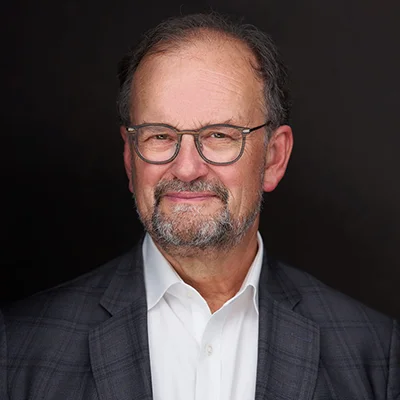
Philip B. Jones
Mr. Jones helped establish the Alliance for Transportation Electrification (ATE), an industry-funded non-profit association that seeks to promote the acceleration of transportation electrification through higher EV adoption, more charging infrastructure, a robust utility role, and interoperability and open standards. He has served as its Executive Director since its inception and is an ex officio member of the Board of Directors. Mr. Jones is regarded nationally as a thought leader in the fields of energy and utility regulation, infrastructure development, and cybersecurity.
Mr. Jones served as a Commissioner on the Washington Utilities and Transportation Commission (WUTC) for 12 years from 2005 to 2017. He served in many leadership positions in NARUC (National Association of Regulatory Utility Commissioners). He served as President of NARUC in 2012-13. He has served on several advisory councils in the areas of energy R&D and utility regulation, including the EPRI Advisory Council and the Directorate Advisory Committee (DAC) for energy and environment for the Pacific Northwest National Laboratory (PNNL). Mr. Jones graduated from Harvard University with a B.A. in East Asian Studies, and currently resides in Seattle, Washington.